2013/01/30

Return to Holy Ground

This blog is called All Korea Considered. I began considering Korea in 1979, when I was very fortunate to live, in the provincial capital city of Daejeon. Its Chinese characters mean "Big Field." About 100 miles south of Seoul, you have to want to go there. Guide books have not shown hospitality to the city, as it is not all that attractive a place for many travelers to spend the night. The official flag of the city:
As a young adult in his early 20's, I lived there two years, as a teacher at Korea Christian Academy (KCA), where I started my teaching career. There I taught East Asian History, Social Studies, Elementary Science(!), and was the Athletic Director(!!) and the Women's Volleyball coach(!!!).

[KCA is now TCIS, or Taejeon Christian International School; same school, same mission, claiming the same heritage. See http://www.tcis.or.kr/]

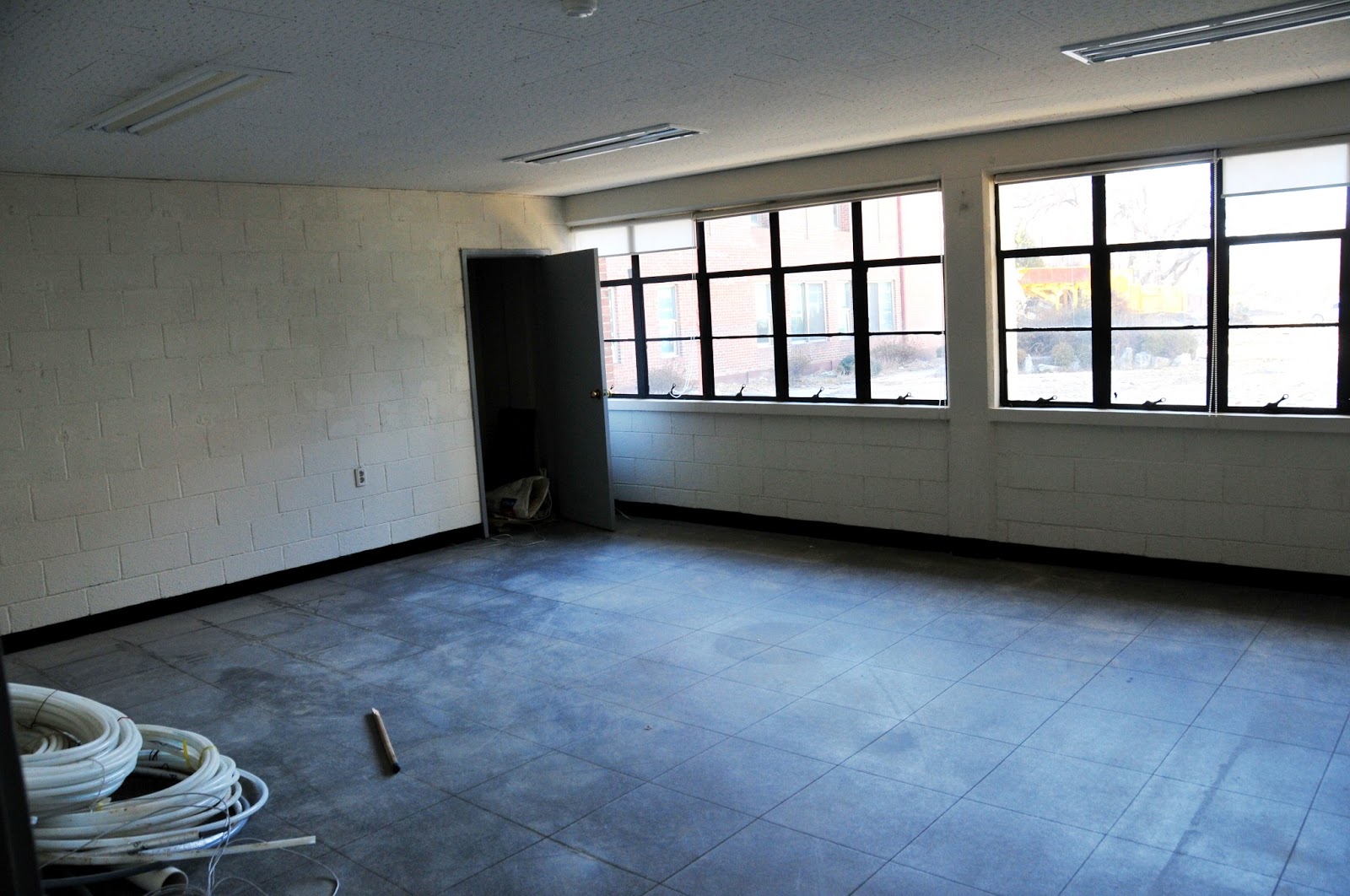
I arrived at KCA with a Master in East Asian History in 1979. When I left two years later, after teaching a course in Christian Theology, in the room (I mean, holy ground) pictured just below, I  headed off to the first of two theological grad schools.


This room is holy ground for me. I was reading C. S. Lewis, Frederick Buechner, and William James at the time, and it became clear from this course that the theological classroom was my future!

KCA is my wife's (Grace Boyer, who grew up in a missionary family in Korea) former school, too. A couple of days ago, 26 January 2013, we both headed down for a great afternoon at both the new campus and the old campus of KCA-TCIS. A memorable afternoon.

We were met by the Assistant Head Ryan Roberts and Alumni Relations officer Ms. Eun Joo Jung at the TCIS campus in Daejeon's Techno Valley. After a great lunch, our tour began (BTW, there are more of such pictures here: https://www.facebook.com/media/set/?set=a.584167527487.2037660.105600820&type=1&l=d94d2a40aa):


Some of the schools that graduates attend:


For TCIS/KCA alums, this is the old scoreboard from the old campus:


A Saturday afternoon of basketball games.

The men's team stretching pre-game.


After our tour of the new campus, we headed over to the old campus, now taken over by the adjacent Hannam University. It was begun as Korea Christian Academy by The Korea Mission of the Presbyterian Church, USA in the 1950s. By the time I got there in 1979, there were about 100 students, K-12. Most were missionary kids (MK's), and many of their parents lived nearby on "Baptist" and "Presbyterian" compounds. A dormitory housed MK's and business kids.

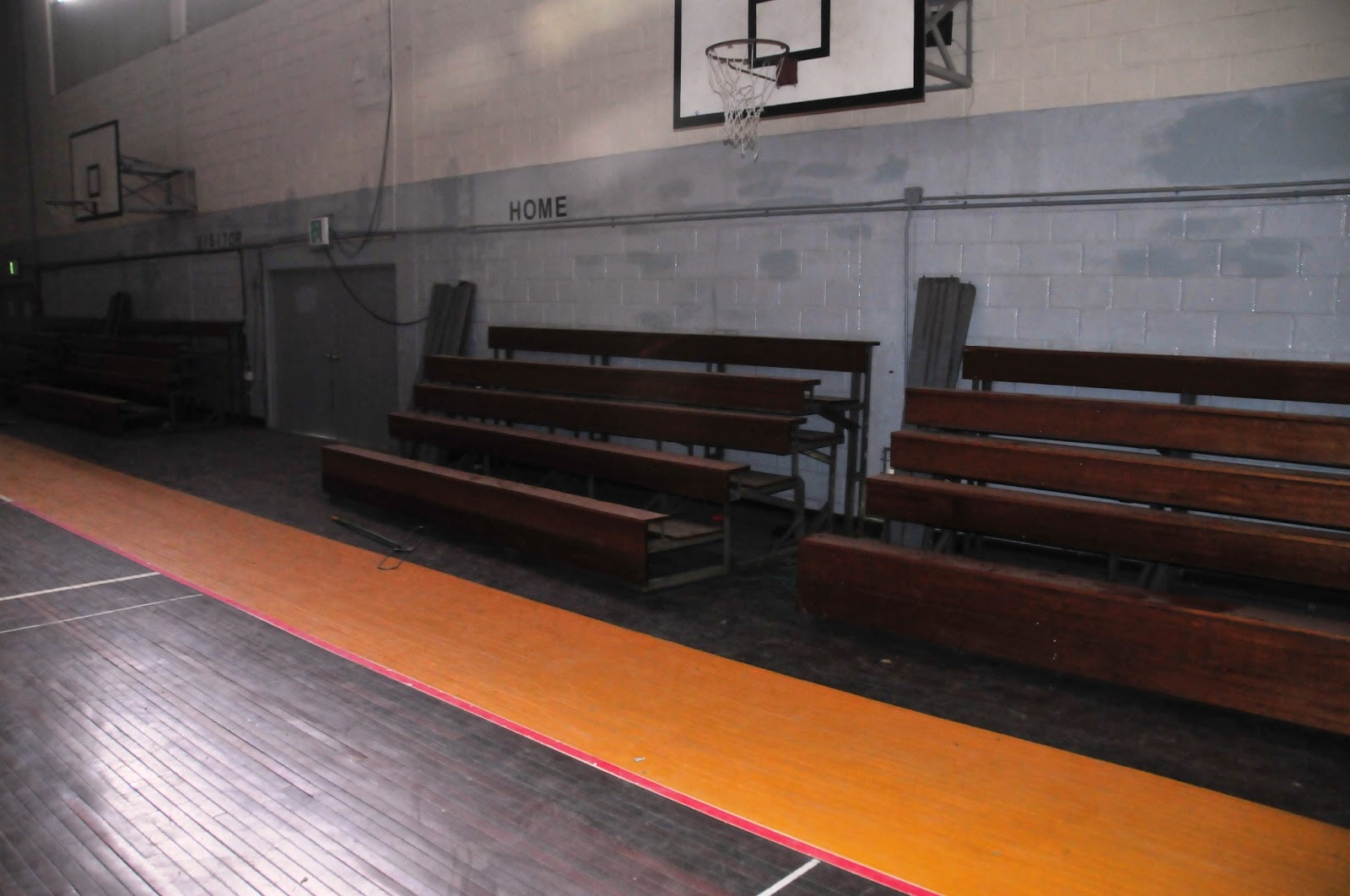
KCA became TCIS in the 1990s, I believe. The school still plays inter-school sports with the American Army Base high schools from Seoul, Taegu and Busan, as well as Seoul Foreign and Seoul International Schools. Until last August, the following pictures depicted the site of TCIS. There's quite a contrast in the facilities, and do forgive this walk down my memory lane. By this point, I suspect only KCA/TCIS-related folks will be reading: (smile)

Much of the area is under reconstruction by Hannam University. On its website, it maps the major buildings here, which we surmise to mean that Hannam will renovate or preserve the buildings. But now, it's mostly a construction mess.

I'll return to words at the very bottom, with some concluding thoughts and reflections.


 Once again: Holy Ground. This is THE classroom where I got saved, FROM a future teaching East Asian History, TO a future in the academic study and teaching of religion/theology. The picture just after that shows the outside of the same room.


Why this post? Whenever I "consider Korea," KCA is the lens through which I see this country. There I learned most of the Korean I know, studied there a year of Chinese characters, and started learning how to do this thing called "teaching." I use all three activities on a daily basis here at Ewha.

KCA/TCIS was so formative in my life, and in so many other lives I know ... a crucial, intense time of life-shaping and -changing. It is my "road less traveled" that has "made all the difference." Without it, I would have had different major milestones marking my life since I was 25: marriage, daughter, schools, career. No New York City, no Mars Hill College, no Ewha Womans University.

I am sad the old site of KCA is so changed. When I lived there, I walked through rice and strawberry fields to get to the school. Small houses had drying peppers out front. Now, it's all high-rise and business, and one loses one's orientation quickly. The old KCA site is difficult to find for the visitor.

Maybe there are many alums or former teachers with similar stories as mine! Our sojourn at the school was a clarifying process: We come to know, at a relatively young age, that which we should do! How fortunate to be able to say that!

Thanks for reading.

Till next post.
Marc

2013/01/13

A Stitch in Time

Today's entry gets a bit into some of the inner workings of the popular mind, through language. 

But first, I DO have a place for my cats. They are safely in Greenville, SC. Thank you Kathy!

Aphorisms and popular sayings pop up all the time when we are in familiar situations that might require a linguistic resolution. Repeating  a popular wisdom-saying helps carry a conversation, establishes rapport among the speakers, and is - for us outsiders - a way to feel the "cultural wind" in our face of this foreign culture.

A country's aphorisms convey encapsulated nuggets of wisdom to the rising generation. 

"A stitch in time saves nine" or "The early bird captures the worm" is a short-hand way to express thrift or work ethic. And we all nod in agreement.

Readers: Please supply your own folk wisdom in the Comments below. What encapsulated wisdom does this list stimulate from your childhood, and from around the world? 

Below is my own collection of aphorisms from Korea. It is incomplete, some are a bit out of date, and some have resonance in next-door Japan. I hope this list provides the English reader with an insight or two about this nation's psyche. The bold-face is the aphorism, and the italics is an explanation.

1. "Don't try to cover the whole sky with the palm of your hand."
Why deny the obvious?

2. "In a place where there is will, there is a road."
Where there's a will, there's a way.

3. "Beans come out from where beans are planted, and red beans come out from where red beans are planted."
You know the tree by its fruit.

4. "Even monkeys may fall from trees."
Anyone can make a mistake. Often used to keep the arrogant or overconfident in check.

5. "Birds listen to day-words and rats listen to night-words."
The walls have ears. Be careful of when or where you say, because there are always people around that may overhear you.

6. "After three years at a village schoolhouse, even a dog can recite a poem."
Practice makes perfect.

7. "An empty cart rattles loudly."
It is not the advertiser of self who achieves the most.

8. "Even if you know the way, ask one more time."
Do not be overconfident and assume that you know anything perfectly well. There are always unknown or unexpected details.

9. "Well begun is half-done."
[This is what I have heard in English.]

10. "Seven falls, eight rises."
Persistence and resilience in a "tortoise and hare" way.

11. "Licking the outside of a watermelon."
Just scratching the surface will not get you dealing with the real problem.

12. "Even Diamond Mountain should be seen after eating."
When deciding what to do, eating should take priority first. (Diamond Mountain, now in North Korea, is the mountain of legends here.) 

13. "The other person's rice cake looks bigger."
The grass is greener on the other side of the hill.

14. "Fixing the stable door after losing the ox."
Too little, too late.

15. "East question, West answer."
When someone gives an answer which is unrelated to the question. Ships (of conversation) passing each other in the night.

16. "A frog in a well."
A person lacking vision and perspective.

17. "A dragon emerges from a ditch."
The greatest and strongest of people often come from a poor background and humble beginnings. (The dragon often symbolizes royalty or leaders.)

18. "Shrimps' backs are broken in a whale fight."
It's the small people or tiny nations who are hurt during a war.

19. "A small pepper is hot."
Fortitude and toughness to accomplish great things has little to do with size or appearance.

20 "A tiger comes when spoken about."
Speak of the devil...!

21. "Too many carpenters knock over the house."
Too many cooks spoil the broth.

Additions? Comments?

2012/11/25

IT'S ALL IN MY HEAD: A Lesson in Orientalism


Criticism is prejudice made plausible. – H. L. Mencken


We walk with our own maps.

Walking Seoul’s streets, or the Ewha campus, I, raised in the Western/American context, find my made-in-USA maps (both cultural and geographical) pretty darn useless most of the time. While I may think my home-grown information is accurate, the data are just “representational.”

What do you mean, Marc?

I grew up in a culture where driving on the right side of the road is a generations-old habit. It’s a habit that transfers: we walk on the right in crowded public places. Walking on the left gets one odd looks, as you negotiate more often that person appearing just in front, where each tries to read each others’ intent about which direction the other is headed.

But not here. It’s a free-for-all, all the time.

Staying right, or left, does not seem to clear the sidewalk of a constant supply of “sidewalk dance” partners. The only time I actually touch Koreans in this rare-touch society occurs in the shoulder-brushes one can expect every few hundred meters in this crowded place.

Here is a government poster one sees often to help “move the needle” of people’s public behavior in walking. It urges people to walk on the right:


●     ●     ●

Living in Korea a generation ago, and now, I come with a great deal of acquired knowledge (“maps”) about the country, its Confucian heritage, cultural mores, history. By the standards of my zip code back in North Carolina, I am an “expert” on Korea. 

The problem back in 1980, and again in 2012, is to assume I know the correctness of “right” and “left” here. I know less-than-enough about the past history, culture, Confucianism, military invasions, and language, yet assume I could know enough about Korea or name Korea’s problems. I feel authorized to predict how best for Koreans (or, at least, my students) to negotiate their futures.

“If they’d only listen to me. I would teach them how to walk! ... Or think!"

It’s an evangelistic mindset, a disposition of control. Notice the “Me” and “Them” grammar. One may take the professor out of America, but can one excise the "America" from the professor?

A website from Emory University describes my problem as Latent Orientalism: the unconscious, untouchable certainty about what the Orient is. The Orient is seen as separate, eccentric, backward, silently different, sensual, and passive. It has a tendency towards despotism and away from progress… Its progress and value are judged in terms of, and in comparison to, the West, so it is always the Other, the conquerable, and the inferior. (For more information, see Edward Said’s seminal work, Orientalism.)

Most of what I come to know is already colored by What/Who resides already in my brain; what I perceive is already behind my senses; and the sights lie – how convenient! – already behind my eyes! If perceived at all, Korea or “The Orient” contains my fingerprint, my voiceprint. I am very good at projecting my own  representations in all that I see, hear, and perceive.


And it's all in my head.
It's all in your mind. 
- lyrics from Mr. Brightside & Spaceman by The Killers

Example of Orientalism in Religion
This is not just psychological. Political, economic and missionary positions are implicated. Has not my country “understood” Islam – another Orientalism – and performed its diplomatic and military operations from within that colorized-colonized view? "We are here to liberate you."

Back to Korea: This blog is entitled All Korea Considered. Has this observer the will and freedom to rise up from the cave of shadows, and leave unreal images unconsidered? Don’t know … 

Colonialism 
             in all its forms 
                         dies hard. 
                                   Ignorance is 
                                               so well organized.

Am I like modern day colorizers of Hollywood black & white films? Readers: Caveat lector! When you read of, or see pictures of this country and its people, you are really inspecting his filters (with your own filters!). Can I stop being so representational, and become clear and transparent so you may Consider All Korea as you read? It’s an ever-elusive goal.

We are always paid for our suspicion by finding what we suspect, wrote Thoreau. We walk this Earth with our own maps, see with lenses ground by our own culture, and expect people to stay so conveniently on their side of the sidewalk. What small universes we inhabit!

Thanks for joining me as I walk these streets. I still pray to bump shoulders with the real Korea.

Marc, lost still in translation.

New Yorker cartoons © by Steinberg and Barsotti.

2012/11/18

EXAM HELL


The title of this topic comes from Japan, but it’s a well-understood term here. About two weeks ago, high school seniors took the test for which they may have been preparing since they were five years old.

(not my picture)

Think SAT on steroids, and then on steroids again.

The nine-hour-long test is ALL-important; it pretty much sets one’s course in life, at least publicly … which universities you can/cannot attend, and thus the sort of folks with whom you will, for the rest of your life, associate:
1.       Marriage choices
2.       Career choices
3.       Life status

One may take this test but once a year. With one’s scores, one may then apply to but three universities. Choose well! Strategy is  intricate; rewards and risks are both high. What if one has a score in the 95th percentile, and you apply to a school known to be slightly above your “level,” or you apply to a school that is at your level, but may be full of already-qualified applicants before yours gets considered?

Preparation for this exam begins, for some, very early in life, and very early in the morning. By the time the person is in high school, they are regularly getting up before 6:00 AM, warming a seat at a “hak-won” (private teaching institute) to bone up on math, or science, or English. After a few hours, they find themselves at their regular seat at middle or high school. After school, a return to a “hak-won” - or two, or three - until 11:00 at night.

Next day, rinse and repeat.

One can go to many parts of Seoul, take a random picture of the buildings, and you can see signs for a score, or more, of these “hak-wons” within the buildings. The Exam is a big business.

And no small pressure for 18-year olds. I have heard that one person in seven in Korea has actively considered suicide. Studies indicate that such early habits in pressure-cooker academics creates depressed people.

Parents and society often wonder what they are doing to their young, but it is difficult to maintain such thoughts in light of an overwhelming cultural habit.

So yesterday, I was STUNNED when I attended a Presbyterian (similar to the PCUSA) service in which the young people got up in front of the worship service, and publicly pledged never to attend a “hak-won,” unless it was to learn cooking or a hobby. Here they are making that pledge:


That took A LOT of counter-cultural energy, many parents saying "NO" to the Exam Hell, and risking their kids' futures. I am still saying to myself, "Wow! That's major!"

Ewha is one of the top-ten universities here, Korea’s top choice for a women’s university. My students have been through Exam Hell, have made their careful strategic choices about Ewha, and are now living on the other side of all that. I wonder who they would be otherwise. I wonder if they ever wonder.

I do not report this to be critical of this wonderful place. As one who tries to report the Normal and the Everyday, I thought you’d like to see things as I do. Your comments are welcome.

Marc

2012/11/10

Happy Pepero Day, you Lovers!


Peppero - Today is 11/11. As you see <11/11> think vertical. Now think of a vertical sweet. 

In the Korean mind, thanks to the Lotte Corporation (like Nestlé or Nabisco) a short while back, and its smart business plan, Korea now has a "holiday" as big as its American equivalent: Valentine’s Day. 

(I don't know how to spell Pebbero, or BBebbero. The P's and B's are, in Korean writing, "double B's." That means you really focus on the initial "B" sound, like an over-emphasized "B" in bulge, or blue ... you blow air through your lower mouth as you make the "B" sound, so sudden hard one could almost blow a candle out.)

The BBePPero candy of choice is a thin vertical swizzle stick of chocolate on a hard pastry. If you think vertical, you can understand why 11/11 is the day chosen for this candy's come-uppance. They are sold in at least flavors or configurations, and the outside of many stores are chock-a-block full of PPeBBero candy promotions. 


It is OK for anyone to give anyone these candies, just like in the USA on Valentine’s Day, and lovers can (read: are pressured to) spend mega-bucks on their arrangements.

I bought one box of BPePBero's for each of my undergraduate students, after I found that this would not be inappropriate. I will give them out on Monday in class. 

If you have any Korean friends, wish them "Happy Pepero Day!"

Marc

2012/10/09

한글 - Hangin' with Hangul Since 1443

The Korean written language has been called one of the most logical alphabets in history. It's an alphabet, not a sign system, like Chinese. Its 24 "letters" consonants and vowels, can be combined in combos of 2-4, arranged in "stacks" or "blocks" to make a syllable. Each stack contains at least one vowel and one consonant

The letters in the Korean alphabet have a required order ("Now I know my ABCs"...), and children learn them in a song, which one can hear/see here

Many Korean words (names, nouns, institutions, etc.) have a Chinese letter behind them, much like English has Latin, Old English, and German among its grandparents. 

That's the lesson for today, October 9, the day each year Korea sets aside to commemorate the invention of the written language by then-King Sejong. The story is that he wanted a more simple way (than Chinese) for uneducated people to write.


Koreans are proud of their language; wouldn't it be kinda cool if we English speakers had a day devoted to its heritage? Here is a game that involves knowing the alphabet:


Class dismissed!

Marc

2012/10/06

CARNIVAL, KOREA STYLE

About 80 miles south of Seoul is Gongju, or Kongju. Along with Bu-yeo, it was one of the two capital cities (not at the same time) of the Baek-je Dynasty, one of three co-existing kingdoms in Korea during its "Three Kingdom" times ... about 50 BCE to around 500 CE. 

Every year, one of these two cities sponsors the Baek-je Cultural Festival. HUGE. The entire town is converted into open markets of traditional foods, dramas, crowd-pleasing dramas, costumes, dances ... THE WORKS!

I had two great personal moments. At the Tomb of King Muryeong, there were open aired tents, with women (mostly) serving up, in traditional dress, traditional teas and foods. 


The rest of the afternoon I toured the old fortress area. I should say here that I toured this area with two old English students I had, and had not seen, since 1981, in Daejeon. Here I am with one, on a traditional see-saw.


Second Great Moment: the evening "parade" that had everyone excited. We arrived an hour early at the town's main square/circle, and hundreds of folks had already taken their place.


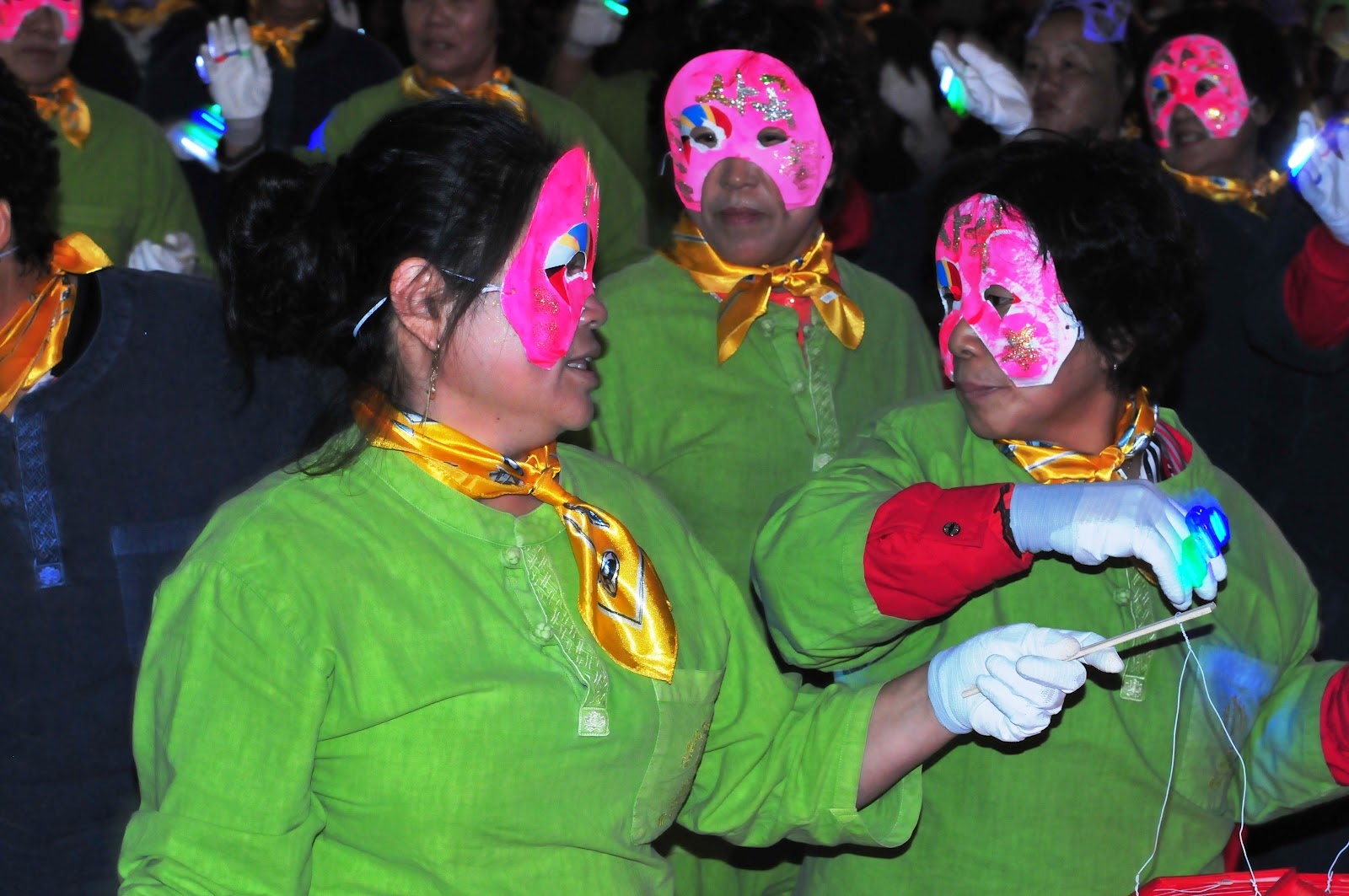
My first lesson of the evening is that "parade" is nine parts Latin American Carnival and one part parade. Surrounding towns and villages send their "act" to the ancient capital, and they have 15 minutes to strut, dance, sing, and act. Wow! Pictures below will show you this. 

My second lesson was that I was, as a foreigner, with an expensive-looking camera, expected to go right into the middle of the actions. The other photographers were. They thought I was foreign press. I must say, after a day of touring, I needed some alone-time, introvert-mode, and the best way I know how to do it is aim a camera.

Here are a bunch of pictures. DO PLEASE see the THREE VIDEOS I have linked for you at the bottom of the pictures. (If you wish to see the complete picture-set, click here.)


Am I making the pictures too big? Let me know.

VIDEOS on Youtube:
1
Female Buddhist Monks Drumming (Drool on this, Asheville Drum Circle!!)


2
Rare Korean Performance-Ritual to help the soul to the next 


3
K-Pop Style synchronized dancing 


Until next time,
Marc


2012/10/01

SeoulFull-Moon

Behind Ewha is a small mountain - Mt. An - that was part of old military and firefighting lookout networks. Read more about "An-san" here.

Last night, with full moon and good weather, I climbed up with my camera. All pictures are looking East. I made the pictures large. Use your side-ways arrows button to re-frame, or your <CTRL+-> (Control + minus sign):


Seo-Dae-Moon prison, now a shrine against Japanese imperialism and Korea's dictatorial recent past.


Thanks for looking. 
-Marc